Practitioner’s Guide
Space Communication Toolkit
A practical guide to explaining space technology and writing briefings people can use.

The way we talk about a space mission affects how people understand it long before they see its results. It can influence what policymakers ask a project to demonstrate, what partners are willing to support and what the public expects a service to deliver. Those expectations can be hard to reset once a project is under way.
Framing begins with a choice about where to start. A satellite team might lead with what its instrument can measure. A city planner using those measurements might begin with a question about which streets to visit before deciding where to add shade. Both accounts can be accurate. Over time, choices like these build a wider narrative about what space is for and whose problems it can help solve.
I put this toolkit together for the practical side of strategic communication. The translation examples show how to make technical language easier to follow while keeping its meaning intact. The briefing exercises help you decide what to lead with, how far the evidence takes you and what to ask of your reader. The public participation exercise looks at what happens when people are invited to help shape a decision. Together, these tools help you refine a message so others can understand it and carry it further.
01 Translate Technical Language
Rewrite one technical sentence in words your reader would use. Compare your draft with the examples below. Can a reader follow it and still get the same facts?
Active Debris Removal
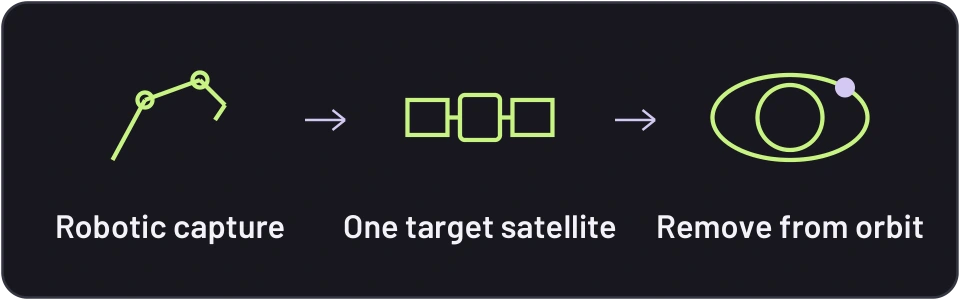

Instead of this
“The mission will demonstrate robotic capture and deorbiting of a target spacecraft.”
Say this
“The mission will test whether a robot can grab one satellite and take it out of orbit.”
Making Supplies on the Moon
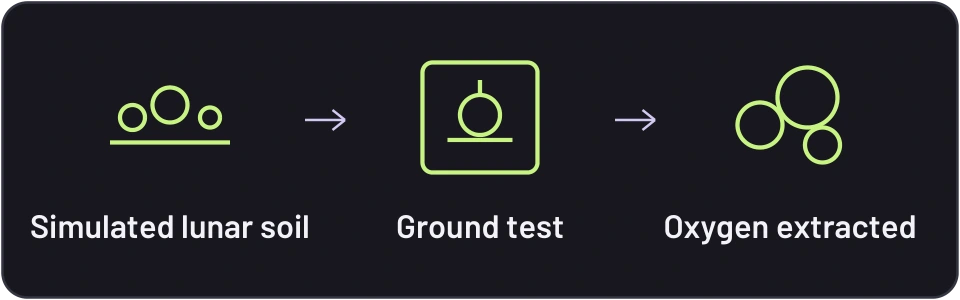

Instead of this
“The prototype extracts oxygen from simulated lunar regolith.”
Say this
“In a test on Earth, the prototype extracted oxygen from material that imitates lunar soil. The next question is how much it could produce on the Moon and what equipment a mission would need.”
Satellite Broadband


Instead of this
“The pilot will evaluate a satellite broadband terminal at each site.”
Say this
“We’ll test whether schools beyond the reach of ground networks can hold classes online using a satellite connection. The trial should show how often calls drop and what the service costs each school.”
Independent Access to Orbit
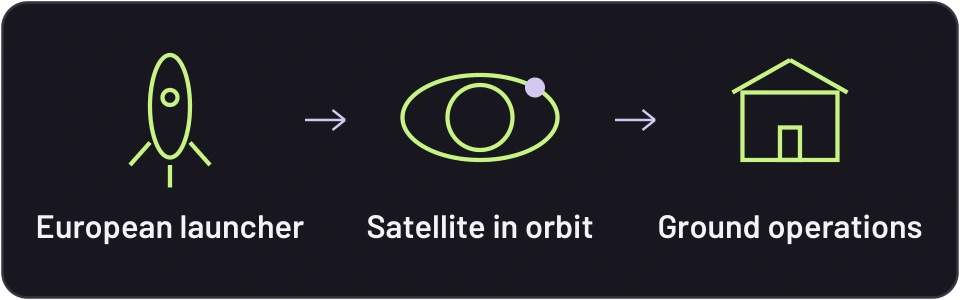

Instead of this
“The programme will use European launch capacity to deploy spacecraft.”
Say this
“The programme will use a European rocket to put its satellites into orbit. Keeping the service available will also depend on who runs it on the ground.”
02 Write a Briefing in Four Steps
A briefing gives a reader enough information to decide what to do next. If a programme manager is weighing whether to extend a trial, explain what the trial showed and what another round could help them find out.
Bring a short briefing or project update, or practise with the examples below. After each exercise, try its question on one line of your own draft. Use the checklist at the end to read it from your reader’s point of view.
Step 1 of 4
Pass the Dinner Table Test
Could a neighbour understand why this matters in thirty seconds?
The Dinner Table Test helps you hear which details a reader needs to make sense of the technology. Read the Galileo sentence, take thirty seconds to explain it to someone outside the field, then compare your explanation with mine.


Technical language
“Galileo’s Return Link Service acknowledges receipt of the distress alert.”
Take 30 seconds to say what happens and why it matters. Revise any part your listener had to guess.
See it in everyday language
At the dinner table
“If a sailor sends a distress signal from a compatible emergency beacon, a confirmation appears on the device. It tells them the rescue system has received and located their signal.”
Hodge · The dinner-party explanationEU Agency for the Space Programme · Galileo Return Link Service (PDF)
Step 2 of 4
Identify the Human Anchor
Whose experience or decision does your story follow?
The person you follow changes the story you tell. Choose the engineer, planner or resident to see what each would put first.
Think of the person you’d interview first. What do they need to understand, find out or decide?
Try it. A satellite heat map shows how warm surfaces were during a pass. Choose a person to see where you could start the story.


Follow the engineer who checks a hot patch on the satellite map against a measurement taken on the ground.


Follow the planner as they use the map to decide which streets to visit before recommending where to add shade.


Follow a resident walking to the bus stop on a hot afternoon. Ask where they find shade along the way.
Illustrative scenarioCopernicus Land Monitoring Service · Land surface temperature
Step 3 of 4
Say What the Evidence Supports
What does the evidence show, and what remains uncertain?
Before you put a number in a briefing, check how it was obtained and what it covers. A tracking catalogue records objects that networks follow. A model can estimate the size of a wider population. Put the source and its date next to the number so the reader knows how to use it.
Tracked in Earth orbit
About 40,000About 11,000 of these objects were active satellites.
Modelled estimate
Over 1.2 millionDebris objects larger than 1 cm.
Try it. You’re writing a short note on orbital debris. Pick a question your reader might ask, then see how to answer it with the figures above.
ESA’s 2025 report put the tracked total at about 40,000 objects, including about 11,000 active satellites. Use “objects” for this figure because the catalogue includes spacecraft that are still working.
ESA’s 2025 report estimated that more than 1.2 million pieces of debris larger than 1 cm were in Earth orbit. Keep both “estimated” and the size threshold in your sentence.
The figures cover different groups. The tracked total includes active satellites. To estimate how much debris was untracked, you’d need a tracked debris count for the same size range and date as the modelled estimate.
Further readingFischhoff & Davis on scientific uncertaintyvan der Bles et al. on uncertainty and trust
Step 4 of 4
End with a Decision
What can this reader decide or do next, and by when?
Give the reader a specific action and a deadline. If they need to read something first, name it.
Try it. A project team needs recommendations by noon on Thursday. Use the arrows to put the reviewers’ actions in order. Check your order to see the sequence and the finished request.
-
Send a recommendation to the project team
-
Read the one-page options brief
-
Choose which option to recommend
Correct order
- Read the one-page options brief
- Choose which option to recommend
- Send a recommendation to the project team
Reviewers need the options before they can choose. Once they’ve chosen, they can send their recommendation.
Finished request
“Read the one-page options brief, choose the option you recommend and send your recommendation to the project team by noon on Thursday.”
Further readingPublications Office of the EU · Plain language and easy-to-read
03 Give Readers a Say
A request for public input should match the decision people can still influence. In this fictional example, a city uses satellite heat maps to plan shade along walking routes. Choose a stage of the project to see how the invitation to residents changes.
What’s decided
The city will add shade along walking routes.
What’s open
Which routes to prioritise.
The invitation
“Tell us which walking routes you think need shade first. Mark a stretch you use regularly and tell us when it’s hardest to find shade there. We’ll use your suggestions to help shortlist routes.”
What’s decided
The city has selected the walking routes.
What’s open
Where to add shade along those routes.
The invitation
“The routes have been selected. Mark a spot along one of them where you regularly wait or walk in full sun. We’ll use your suggestions to shortlist locations for shade.”
FrameworkPlanning how people can respond · KU Leuven Space Studies research
The same heat map supports two different requests. Before inviting input on your own project, write down the decision that’s still open and how you’ll use the responses.
Before You Send
Read your draft once from the reader’s point of view. Tick each question your draft answers.
Conclusion
The challenge in space communication is getting a technically sound message to travel across teams and institutions. An engineering update may inform a funding decision or become the basis for a public announcement. As it moves, the people using it will pick out the details that matter to them. The question is whether they can tell what the evidence supports and what still needs to be decided.
Framing helps you make that distinction clear. If you’re writing for someone who has to decide whether to extend a trial, tell them what the trial established and what a second round would help them find out. If you’re inviting people to take part in a decision, explain what they can still influence and how their input will be used. Those choices give the reader a reason to pay attention and a way to respond.
For your next project, pick one message you need people outside your team to hear. Use the toolkit to refine it, then decide where it will have the most use. That could be a briefing ahead of a funding meeting or a short explanation shared through a group that already works with the people affected. See which part of the message people repeat and where they ask for more detail. Both can tell you what to work on in the next draft.
Downloads
- Illustrated guide (PDF)Translation examples, briefing exercises, public participation and sources.
- One-page checklist (PDF)Four questions for your next draft.
Sources and Credits
The diagrams illustrate the exercises. The references identify the sources of the data and mission examples.
- European Space Agency. ClearSpace-1.
- European Space Agency. (2020). ESA opens oxygen plant, making air out of moondust.
- Hodge, R. (2014). The dinner party. Good Science Writing.
- European Union Agency for the Space Programme. Galileo Search and Rescue Return Link Service (PDF).
- Copernicus Land Monitoring Service. Global Land Surface Temperature.
- European Space Agency. (2025). ESA Space Environment Report 2025.
- Fischhoff, B., & Davis, A. L. (2014). Communicating scientific uncertainty. PNAS, 111(Suppl. 4), 13664–13671.
- van der Bles, A. M., van der Linden, S., Freeman, A. L. J., & Spiegelhalter, D. J. (2020). The effects of communicating uncertainty on public trust in facts and numbers. PNAS, 117(14), 7672–7683.
- Publications Office of the European Union. Plain language and easy-to-read.
- El Mourad, H. (2025). Strategic Communication in the Space Sector. KU Leuven Space Studies thesis framework.